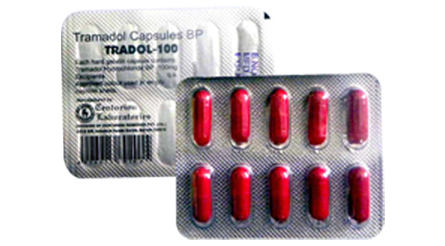
Drug Uses
Tramadol is used to relieve moderate to moderately severe pain. It
also may be used to treat pain caused by surgery and chronic conditions
such as cancer or joint pain. Tramadol works by decreasing the brain's
perception and response to pain. It also reduces the size or magnitude
of the pain signal passed from one nerve to another. This medication is
sometimes prescribed for other uses; ask your doctor or pharmacist for
more information.
How Taken
Tramadol comes as a tablet to take it orally. It usually is taken
every 4-6 hours as needed. It may be taken with or without food. Follow
the directions on your prescription label carefully, and ask your doctor
or pharmacist to explain any part you do not understand. Take Tramadol
exactly as directed. Tramadol can be habit-forming. Do not take a larger
dose take it more often, or for a longer period than your doctor tells
you to.
Warnings/Precautions
Before taking Tramadol, tell your doctor if you have kidney disease;
liver disease; or a history of alcohol or drug dependence. You may not
be able to take Tramadol, or you may require a dosage adjustment or
special monitoring during treatment if you have any of the conditions
listed above. Tramadol is in the FDA pregnancy category C. This means
that it is not known whether it will be harmful to an unborn baby. Do
not take this medication without first talking to your doctor if you are
pregnant. It is also not known whether Tramadol passes into breast milk.
Do not take Tramadol without first talking to your doctor if you are
breast-feeding a baby. If you are over 75 years of age, you may be more
likely to experience side effects from Tramadol. The maximum daily dose
of Tramadol for people over 75 years of age is 300 mg. Tramadol is not
approved by the FDA for use by children younger than 16 years of age.
Missed Dose
Take the missed dose as soon as you remember it. However, if it is
almost time for the next dose, skip the missed dose and continue your
regular dosing schedule. Do not take a double dose to make up for a
missed one.
Possible Side Effects
Although side effects from Tramadol are not common, they can occur.
The most frequently reported events were in the central nervous system
(Migraine, Speech disorders) and gastrointestinal system
(Gastrointestinal bleeding, Hepatitis, Stomatitis, Liver failure). Tell
your doctor if any of these symptoms are severe or do not go away:
dizziness, headache, drowsiness, blurred vision, upset stomach,
vomiting, and diarrhea. If you experience any of the following symptoms,
call your doctor immediately: fast heartbeat, redness, swelling, and
itching of the face, numbness or tingling of the hands and feet,
difficulty breathing, changes in urination, seizures.
Storage
Dispense in a tight container. Store at 25°C (77°F); excursions
permitted to 15 - 30°C (59 - 86°F).
Overdose
Seek emergency medical attention. Symptoms of a Tramadol overdose
include difficulty breathing; shallow, weak breathing; and seizures.
More Information
Do not drink alcohol while taking Tramadol. Alcohol may cause a
dangerous decrease in breathing and/ or liver problems when used during
treatment with Tramadol. Use caution when driving, operating machinery,
or performing other hazardous activities. Tramadol may cause dizziness
or drowsiness. If you experience dizziness or drowsiness, avoid these
activities. Avoid sleeping pills, tranquilizers, sedatives, and
antihistamines except under the supervision of your doctor. These drugs
may increase drowsiness caused by Tramadol.
Disclaimer
This drug information is for your information purposes only, it is
not intended that this information covers all uses, directions, drug
interactions, precautions, or adverse effects of your medication. This
is only general information, and should not be relied on for any
purpose. It should not be construed as containing specific instructions
for any particular patient. We disclaim all responsibility for the
accuracy and reliability of this information, and/or any consequences
arising from the use of this information, including damage or adverse
consequences to persons or property, however such damages or
consequences arise. No warranty, either expressed or implied, is made in
regards to this information.